Christopher
Badgett
const roles = [
'cybersecurity student',
'homelab builder',
'3D printing hobbyist',
]
I break things in controlled environments, build redundant storage systems at home, and turn spools of plastic into useful stuff. Currently studying cybersecurity and expanding my homelab one rack unit at a time.
72 TB
NAS capacity
4
Pi cluster nodes
8+
3D prints this year
∞
homelab rabbit holes
// selected work
Featured Projects
Homelab NAS Server
72 TB of redundant storage on TrueNAS Scale with ZFS
A purpose-built network-attached storage server running TrueNAS Scale. Features a 6-drive ZFS RAIDZ2 pool, a separate SSD cache VDEV, automated S3-compatible snapshots to Backblaze B2, and container workloads for Plex, Nextcloud, and a private container registry.
CTF Toolkit
A batteries-included CLI for capture-the-flag competitions
A Python CLI built to accelerate common CTF workflows: automated base-encoding detection and decoding, frequency analysis for classical ciphers, steganalysis helpers (LSB extraction, zsteg wrappers), format string exploit templating, and a local flag tracker with per-challenge notes.
Homelab Network Monitor
Full-stack DNS-level ad blocking and traffic visibility
A self-hosted network observability stack: Pi-hole for DNS sinkholing paired with Unbound as a recursive resolver, metrics scraped by Telegraf, stored in InfluxDB, and visualised in Grafana. Provides per-device traffic dashboards, alerting on anomalous query spikes, and weekly HTML digest emails.
Flipper Zero Wi-Fi Attack Analysis
WPA2 deauth + Evil Twin attacks with a $200 pocket device
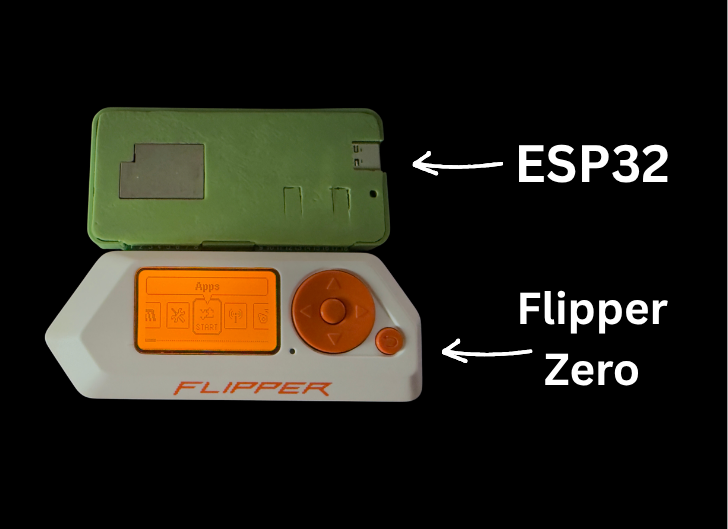
University of Akron CIS senior capstone. Demonstrated two wireless attack vectors against WPA2-Personal networks using a Flipper Zero with ESP32 Wi-Fi Dev Board (Marauder firmware): a deauthentication handshake capture cracked offline with Hashcat on a GPU-accelerated Parrot OS VM, and an Evil Twin captive portal harvesting credentials through spoofed Apple, Starbucks, and TP-Link login pages. Verified mitigations including WPA3-Personal (fully blocks hash extraction), strong passphrases, and user awareness.